
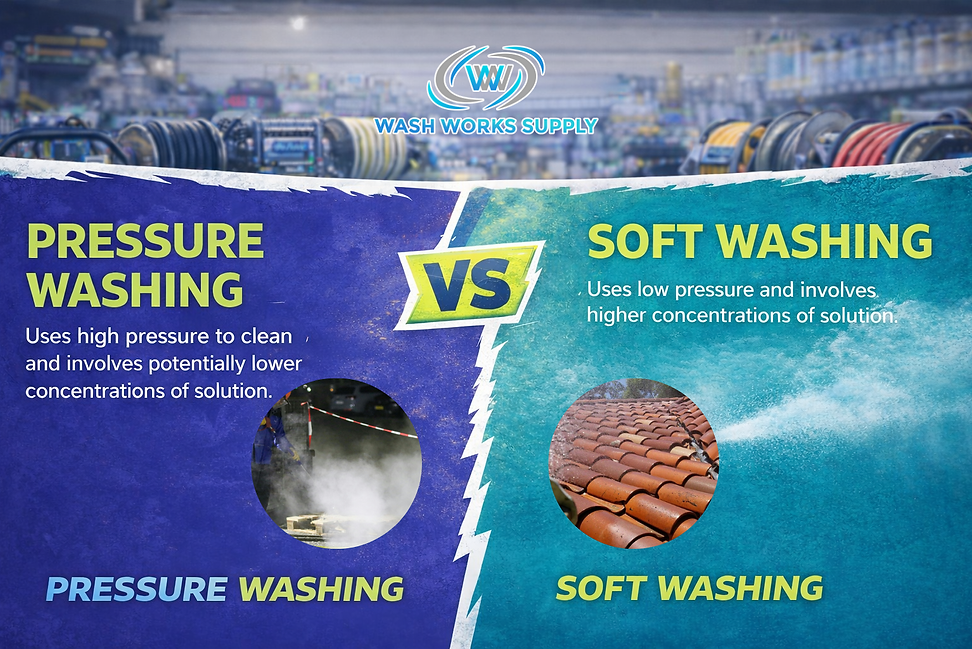
Pressure Washer
VS
Soft Wash System
Which Is Right for Your Cleaning Business
If you are getting into exterior cleaning or upgrading your equipment, one of the first real decisions you will face is whether a pressure washer or a soft wash system is the right tool for your work. Both systems are powerful when used correctly. Both can cause damage when used incorrectly. And both serve very different purposes depending on the surfaces you clean and the results you want.
This guide breaks down the real differences between pressure washing and soft washing so you can make a confident decision based on your goals, not marketing noise.
What Is A Pressure Washer?
A pressure washer uses high pressure water to remove dirt, grease, grime, gum, and buildup from hard surfaces. These machines rely on PSI and GPM to physically blast contaminants away.
Pressure washers are best known for power and speed on durable surfaces. When used correctly, they are one of the most effective tools in exterior cleaning.
Best Uses For A Pressure Washer
Pressure washers are ideal for concrete driveways, sidewalks, parking lots, heavy equipment, grease stained surfaces, commercial flatwork, dumpster pads, and hard non porous materials that can withstand force.
Pros of Pressure Washing
Pressure washing delivers fast visible results on tough surfaces. It is extremely effective for grease, oil, chewing gum, and heavy buildup. It reduces chemical usage in many scenarios and is the backbone of most commercial cleaning operations.
Cons of Pressure Washing
High pressure can damage siding, wood, roofing materials, windows, and delicate surfaces. Improper use can etch concrete, strip paint, force water behind siding, and kill landscaping. It also requires proper technique and surface knowledge to avoid costly mistakes.
Shop Commercial Pressure Washers






What Is A Soft Wash System?
A soft wash system uses low pressure water combined with cleaning solutions to kill organic growth like mold, algae, mildew, and bacteria. Instead of blasting buildup away, soft washing treats the root cause and allows the solution to do the work.
Soft washing is about control, surface protection, and long lasting results.
Best Uses For A Soft Washing
Soft wash systems are ideal for house siding, roofs, stucco, vinyl, painted surfaces, fences, decks, outdoor furniture, and areas with organic growth where pressure would cause damage.
Pros of Soft Washing
Soft washing is safer for delicate surfaces and reduces the risk of damage. It provides longer lasting clean results because it kills growth rather than just removing surface stains. It uses lower pressure which means less wear on surfaces and less risk for inexperienced operators.
Cons of Soft Washing
Soft washing relies on proper chemical mixing and dwell time. It may take longer than pressure washing in some applications and requires chemical knowledge and responsible handling. It is not designed for heavy grease or hard surface restoration.
Shop Commercial Soft Wash Systems


Pressure Washer vs Soft Wash System Side by Side
Pressure Washer
Uses high pressure water
Best for concrete and hard surfaces
Removes heavy grime and grease
Higher risk of surface damage if misused
Essential for commercial flatwork
Soft Wash System
Uses low pressure and cleaning solutions
Best for siding, roofs, and delicate surfaces
Kills mold and organic growth at the source
Lower risk of damage
Ideal for residential washing
What About BOTH?
Pressure Washing and Soft Washing Combined?
Most professional exterior cleaners do not stay locked into just one system for long. As jobs expand and surfaces vary, relying on only pressure or only soft washing becomes limiting.
That is where combination systems come into play.
Instead of choosing between pressure washing and soft washing, many contractors choose a setup that allows them to do both efficiently without switching machines or compromising results.
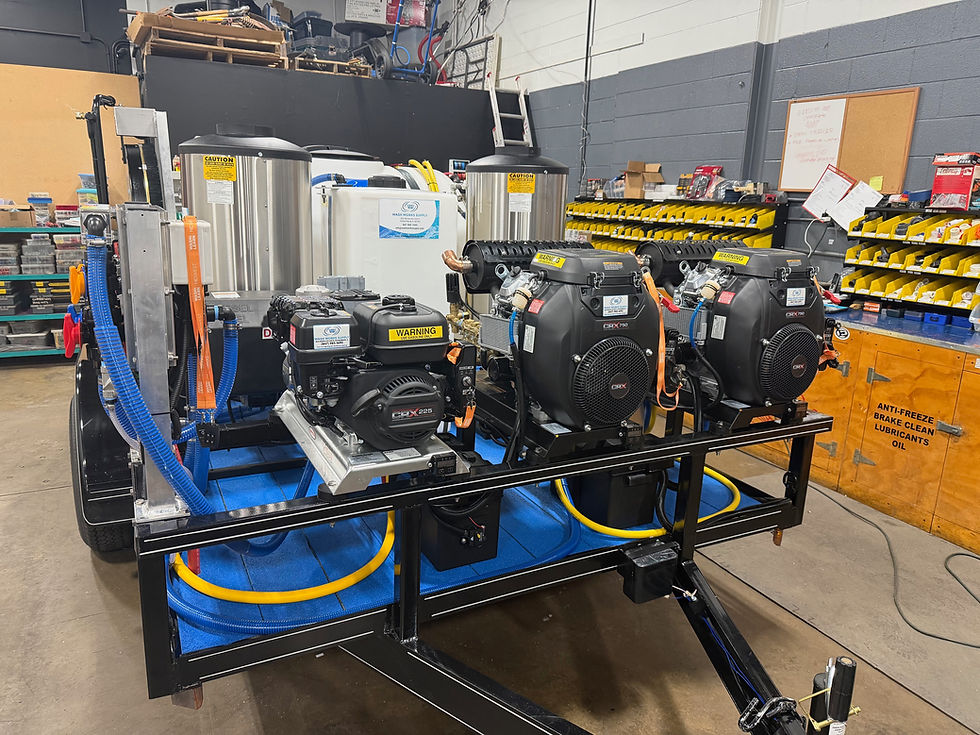
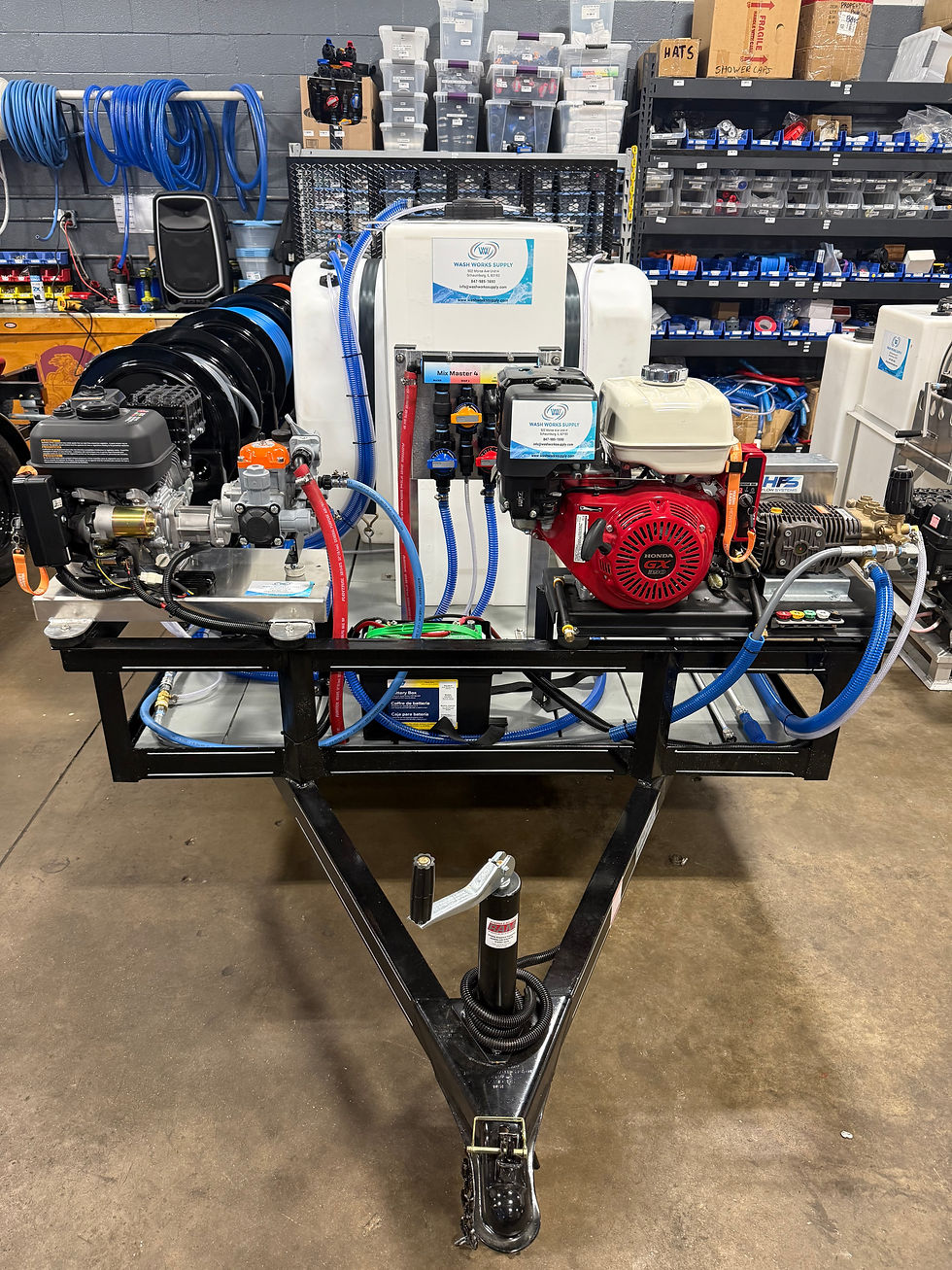
This is where the Dual Wash Pro fits.
The Dual Wash Pro is designed for contractors who want flexibility without complexity. It allows you to switch between high pressure cleaning for hard surfaces and low pressure chemical application for delicate surfaces using one integrated system. That means concrete, siding, roofs, fencing, and flatwork can all be handled with the right method at the right time.
Using both methods properly is not about using more force. It is about using the correct process for each surface. A dual system lets you clean aggressively where it is safe and gently where it matters most.
For contractors, this means fewer limitations on job types, higher average ticket values, faster transitions between services, and less equipment clutter on the truck or trailer. For property owners, it means safer cleaning, better results, and longer lasting finishes.
If you want the versatility to handle residential and commercial work without overcomplicating your setup, a dual wash system is often the smartest long term investment.
The key is not choosing pressure or soft washing. The key is knowing when to use each and having equipment that lets you do both the right way.
Shop Dual Wash Pro


Which Setup Is Right For You?
If your work is primarily commercial flatwork, fleet washing, or heavy surface cleaning, a pressure washer will be your foundation.
If your work is primarily residential homes, siding, and roofing, a soft wash system may be the better starting point.
If you want versatility, growth potential, and the ability to handle nearly any exterior cleaning job safely, a dual system is often the smartest long term investment.
Get Help Choosing the Right System
Choosing the right setup is about more than PSI or chemical strength. It is about matching equipment to the work you actually plan to do.
Wash Works Supply helps contractors and property owners select systems that protect surfaces, improve efficiency, and support long term growth. Whether that means a pressure washer, a soft wash system, or a dual setup like the Dual Wash Pro, the goal is the same. Invest once and invest correctly.
Want to build a rig?